Is School Enough? Why British Curriculum Students Sometimes Need More


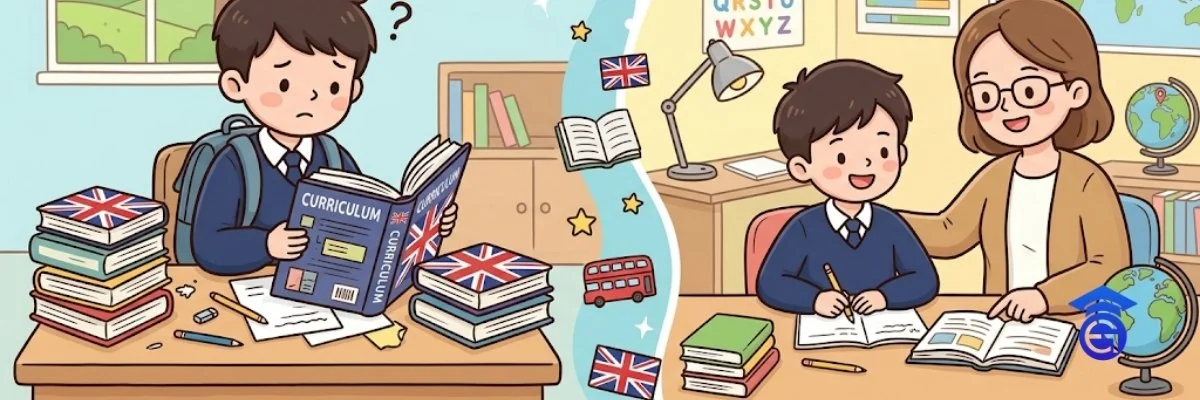
Every parent asks themselves some version of this question at some point, usually quietly, sometimes at eleven at night while looking at a report card. My child’s school is good. The teachers seem to know what they’re doing. So why does it feel like something’s still missing? It’s not a disloyal question, and it’s not a sign anything’s gone wrong. It’s actually a pretty reasonable thing to wonder, and the honest answer is more specific than “yes” or “no.”
What this covers
- What “is school enough” is actually asking
- The class size math nobody says out loud
- When the syllabus pace and your child’s pace don’t match
- Knowing the content versus answering the actual paper
- When school genuinely is enough, honestly
- What good tuition actually changes
- Questions people are actually asking right now
What “Is School Enough” Is Actually Asking
Nobody asking this question is really asking whether their child’s school is a good school. Most of the time, it is. What they’re actually asking is something narrower and more useful: is the specific structure of a classroom, one teacher, twenty-something students, a fixed syllabus timeline, the right shape of support for my specific child, right now, in this subject.
That’s a genuinely different question, and it deserves a genuinely different answer than “trust the school” or “everyone needs a tutor.” School is built to do something particular well: deliver a curriculum to a group, consistently, over a full academic year, to a broad range of students at once. It’s not built to notice that one specific student in the back row understood the concept in September but lost the thread somewhere around half term and has been quietly compensating ever since. That’s not a criticism of teachers. It’s just what happens at scale.
The Class Size Math Nobody Says Out Loud
Here’s a number worth sitting with for a second. Many British curriculum classrooms across the UAE run somewhere between 22 and 30 students per teacher, sometimes more in popular subjects like Maths or Sciences at IGCSE level. A single class period is usually somewhere around 45 to 60 minutes. Do the maths on that and the amount of individual attention any one student can realistically expect in a given lesson is measured in minutes, if that.
I want to be careful here, because this isn’t a dig at teachers, most of whom are working genuinely hard within a structure they didn’t design and can’t easily change. A teacher managing 28 students through a lesson plan simply cannot pause for eight minutes to work through one student’s specific confusion about a single concept without the other 27 students losing momentum. That’s not a failing. It’s arithmetic. And it’s exactly the gap a smaller setting, whether that’s one-to-one tuition or a genuinely small group, is built to close.
Worth noticing: a student who never raises their hand isn’t necessarily a student who’s following along fine. Some of the most quietly behind students I’ve come across were ones who’d learned to nod at the right moments rather than admit confusion in front of a full class. That instinct is completely understandable at fifteen, and it’s exactly the kind of thing a smaller setting makes much harder to hide.
When the Syllabus Pace and Your Child’s Pace Don’t Match
A syllabus has to move at one speed for an entire class. That’s not a choice, it’s a structural necessity. Cambridge and Edexcel both publish content that’s expected to be covered within a set academic timeframe, and a school with exam deadlines to hit doesn’t have the flexibility to slow down for one topic just because it’s landing awkwardly for a handful of students that week.
Most students are fine with that. Some genuinely aren’t, not because they’re less capable, but because understanding doesn’t arrive on a fixed schedule. I’ve seen students who were completely lost on quadratic equations in October click with the exact same content in December, once something else they’d learned in the meantime made it suddenly make sense. In a classroom, that student has already moved on to three more topics by the time the click happens, and now they’re carrying a compounding gap rather than a single confused week.
This is where individual pacing genuinely earns its place. Not because school teaching is bad, but because no single pace is right for every student on every topic, and a classroom of 25 has to pick one pace and commit to it.
Knowing the Content Versus Answering the Actual Paper
This is the gap I’d argue matters most, and it’s the one families notice last, usually right around mock exam results, when a student who “understood everything” somehow doesn’t have the grade to show for it.
Here’s the honest reality of it. Knowing a topic and being able to answer an exam board’s specific version of a question about that topic are related but genuinely separate skills. Cambridge and Edexcel each have their own command word conventions, their own mark scheme structure, their own particular way of phrasing a question that a student needs to recognise instantly under time pressure. A student can understand photosynthesis perfectly and still lose marks because they didn’t structure their answer the way the mark scheme actually rewards.
School does teach exam technique, but usually as one component among many, squeezed into the same limited class time as everything else. Focused, repeated past paper practice, the kind where a tutor sits with a student’s actual attempted answer and shows precisely where marks were lost against the real scheme, is a different intensity of work entirely. It’s the difference between being told exam technique matters and actually building the habit through repetition.
If this sounds like where your child’s at right now
It might be worth a quick conversation with Edugravity’s team about what’s actually behind a grade that doesn’t match a student’s understanding, and what a focused plan to close that specific gap could look like.
WhatsApp Edugravity Book Free TrialWhen School Genuinely Is Enough, Honestly
I want to say this plainly, because it’s easy for any piece of content like this to slide toward “everyone needs tuition,” and that’s not actually true, and it’s not what I believe.
Some students genuinely do fine on school teaching alone. Self-directed students who process the syllabus pace comfortably, who use past papers independently without needing someone to point them at that habit, and who ask questions in class without hesitation, often don’t need much beyond what school already provides. For that student, extra tuition might add some polish, but it’s not fixing a real gap, because there isn’t one.
There’s a genuine trade-off worth naming here too. Adding tuition on top of a full school schedule isn’t free, in time or in money, and for a student who’s already coping well, that extra load can do more harm than good if it just adds pressure without addressing an actual need. The honest question isn’t “should every student have a tutor.” It’s “is there a specific, identifiable gap here that school’s structure genuinely can’t close on its own.” Sometimes the answer is no, and that’s a perfectly fine answer.
What Good Tuition Actually Changes
When there is a real gap, what actually moves the needle isn’t more hours of generic revision. It’s precision. A tutor working with one student, or a genuinely small group, can do three things a full classroom structurally can’t: adjust pace to the individual, spend disproportionate time on the specific topic that’s actually weak rather than moving on because the syllabus says to, and drill exam technique against the real board’s mark scheme until it becomes automatic rather than something a student half-remembers under pressure.
None of that replaces school. It sits alongside it, filling the specific structural gaps a classroom of 25 or 30 was never going to close on its own, no matter how good the teacher is. That’s the honest version of what tuition does. Not a substitute for school, and not a guarantee of an A*, but a genuine answer to the specific, narrower question most parents are actually asking when they wonder whether school is enough.
There’s a reflective point worth sitting with here, one that took me a while to properly appreciate. The parents who ask this question earliest, often when their child seems to be doing fine, tend to end up in a better position than the ones who wait for a mock exam result to force the conversation. A small gap caught in October is a much easier fix than the same gap discovered in May with an exam six weeks away.
Not sure whether there’s an actual gap worth addressing?
A free diagnostic gives a clear, honest picture of where things stand, whether that means a focused plan is genuinely worth it or your child’s doing fine as things are. Cambridge and Edexcel, in Sharjah or online across the UAE.
WhatsApp Edugravity Book Free DiagnosticQuestions People Are Actually Asking Right Now
The One Thing Worth Taking From This
School isn’t failing your child if they need something more, and needing something more doesn’t mean the school got it wrong. A classroom of 25 students has to move at one pace, and it’s structurally incapable of giving every student the exact individual attention their specific gap needs. That’s not a flaw to fix. It’s just what a classroom is.
The useful question isn’t “is school enough” in the abstract. It’s “is there a specific gap here, and does my child’s situation call for the kind of focused, individual attention a classroom of 25 was never going to provide.” Sometimes the honest answer is no. Often, when a parent’s asked the question at all, it’s worth finding out for sure rather than guessing either way.
Wondering if it’s worth a conversation?
Edugravity’s team can talk through where things actually stand and whether a tailored plan makes sense, no pressure either way. In-person in Sharjah at 107 Al Reem Plaza, Corniche Street, or online across the UAE.
WhatsApp Edugravity Book Free Trial ClassKey Takeaways
- Class sizes of 22 to 30 students mean structurally limited individual attention, regardless of how good the teacher is
- A single syllabus pace can’t match every student’s individual understanding curve on every topic
- Knowing content and answering an exam board’s specific mark scheme are related but genuinely different skills
- School genuinely is enough for some students, particularly self-directed ones without an identifiable gap
- Catching a gap early, before a mock exam forces the issue, is far easier to fix than closing it in the final weeks before an exam