
Cambridge IGCSE & AS/A Level March 2026 Results: When They’re Out, How to Access Them, and What Comes Next
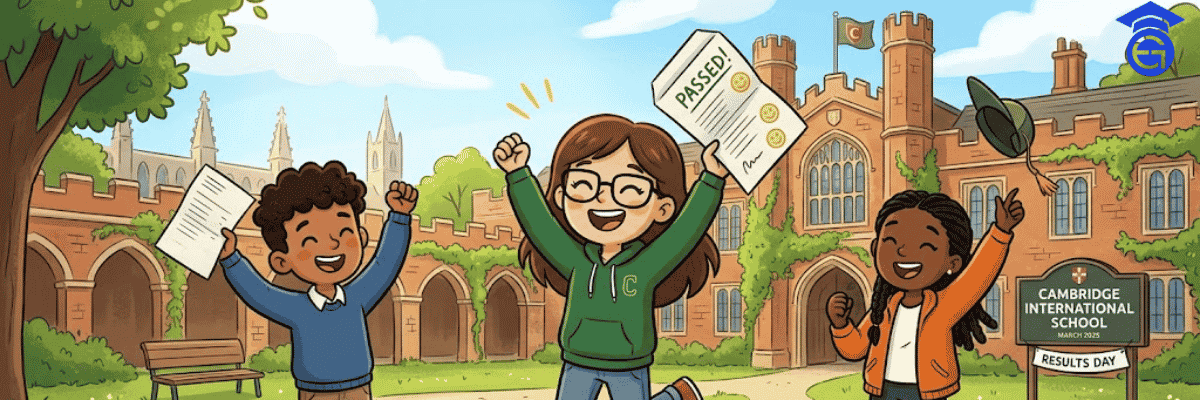
The waiting is its own kind of exam. You’ve already sat through the papers, second-guessed your answers, and moved on as best you could. Now the Cambridge March 2026 results are nearly here, and the question shifts from what did I write to what does it say. Here’s everything you need to know about how and when to access your results, and how to think clearly about whatever comes next.
What’s covered in this guide
When Are the Cambridge March 2026 Results Coming Out?
Mark 19 May 2026 in your calendar. That’s the official date Cambridge International Education releases results for the February/March 2026 exam series on CIE Direct. Both IGCSE and AS/A Level results come out on the same day.
The March series runs from 5 February to 9 March. After that, it’s roughly ten weeks of waiting while Cambridge marks scripts, moderates coursework, and awards grades. It feels long. It genuinely is long. But it’s also fairly standard for an international awarding body processing hundreds of thousands of scripts from students in over 150 countries.
Here’s the full timeline for the March 2026 series, officially confirmed by Cambridge International:
| Milestone | Date |
|---|---|
| March 2026 series begins | 5 February 2026 |
| March 2026 series ends | 9 March 2026 |
| Priority results application deadline | 30 April 2026 |
| Results released on CIE Direct | 19 May 2026 |
| Results despatch sent to schools | Early June 2026 |
| Deadline for enquiries about results | 11 June 2026 |
| Deadline for coursework return requests | 6 June 2026 |
For UAE students: Cambridge doesn’t publish a specific release time, but results on CIE Direct typically become available in the morning hours. Your school’s exams officer will usually notify you once results are accessible, though some students log in directly themselves. Check with your school about how they handle results day.
If you applied for the priority results service before 30 April, your results will be sent to specified institutions in advance. If you didn’t, don’t worry. The 19 May release date still gives you plenty of time for most applications and university procedures.
How to Access Your Results on 19 May
There are two ways your grades come to you, and which one applies depends on how your school has set things up.
Through your school
Most Cambridge schools in the UAE manage results through their own systems. Your exams officer downloads results from CIE Direct and then either prints your statement or sends you a password so you can log in yourself at the Cambridge candidate results portal: myresults.cie.org.uk.
Your school will likely send a message on results day. Some send WhatsApp notifications. Others email. A few still do it the old way and ask students to come in person. Ask your school what their process is if you haven’t already.
Through the Cambridge candidate portal directly
If your school provides login credentials, you can check your results yourself at myresults.cie.org.uk. You’ll need your candidate number and a password from your school. Cambridge doesn’t give you access credentials directly. That’s important to know because there’s no shortcut around your school here.
Something I’ve noticed with students: A lot of anxiety on results day comes from not knowing what time results go live. The honest answer is that Cambridge doesn’t guarantee a specific hour. I’ve seen results accessible by early morning, and occasionally there are brief delays. If it’s not up at 7am, wait a bit before panicking. Refreshing constantly doesn’t speed things up.
Your result is a statement of achievement that lists each subject, the grade awarded, and the exam series. Save or screenshot it. You’ll need it for university applications, visa processes, and anything else that asks for academic credentials.
Understanding What Your Grade Actually Means
Cambridge IGCSE uses a grade scale from A* (the highest) down to G, with U indicating ungraded. Cambridge AS and A Level uses A* to E, with U for ungraded. These aren’t percentage scores, and the cutoff marks for each grade vary by subject and by exam series depending on how the papers went overall.
That last part matters more than people think. A 75% mark in one series might award a B; in a harder paper, the same percentage might get you an A. Cambridge uses a process called grade thresholds to set these boundaries after marking is complete, based on the overall performance of the student cohort.
Grade threshold tables
Cambridge publishes grade threshold tables for every subject after results day. These show exactly what mark was required for each grade in each paper. If you’re curious whether you were close to the next grade up, or just want to understand how your mark translated, these tables are publicly available on the Cambridge International website under each qualification’s results statistics page.
I’d strongly encourage anyone who’s feeling uncertain about their result to look at these. Not to second-guess Cambridge, but because understanding where you landed relative to the threshold gives you much more useful information than just staring at a letter.
The March series is smaller by design. Not all Cambridge subjects are available in the February/March series. It’s primarily offered for students retaking specific subjects, often IGCSE Mathematics, English, or sciences where students need to improve before progressing. If you sat the March series, there’s a good chance you know exactly why you’re sitting this series, which gives your result a very specific context.
What to Do If Something Feels Wrong
Results don’t always match expectations. Sometimes the gap is enormous. That feeling deserves to be taken seriously, not brushed aside.
Cambridge has a formal process for reviewing results, and the deadline for submitting an enquiry about a result from the March 2026 series is 11 June 2026. That gives you about three weeks after results day to make a decision, which isn’t long.
The types of enquiries available
There are a few different routes. A clerical check looks for administrative errors: whether marks were added up correctly, whether all components were included. This doesn’t involve any re-marking. A review of marking asks an experienced examiner to look at your script again to check whether the marking was applied correctly. If there’s an error found, your grade can go up or, technically, come down. That’s a real possibility and worth knowing before you request one.
The route to requesting an enquiry goes through your school. Individual students can’t submit enquiries directly to Cambridge. Your exams officer handles that, so if you’re concerned about a result, speak to your school immediately rather than waiting.
Getting a copy of your script
You can request access to your marked script to see where you lost marks. This isn’t a formal enquiry, and it won’t change your grade, but it can be genuinely useful if you’re planning to retake or just want to understand what went wrong. The deadline for script requests for the March 2026 series is 11 March 2027, which gives you much more time, though your school will have an earlier internal deadline.
Planning Your Next Steps Honestly
This is the part most guides skip, probably because it’s uncomfortable. Results day isn’t just a number. It’s a moment that asks you what you’re going to do.
If the result is what you needed
Good. Genuinely. Move forward with whatever comes next, whether that’s a university application, a programme requirement, or just the confidence that this particular subject is done. Don’t let anyone diminish what you worked for.
If the result isn’t what you needed
This happens more often than results day social media would have you believe. I’ve worked with students who felt completely blindsided by a grade that didn’t match their effort or their mock performance. It’s genuinely awful in the moment.
The practical questions are: do you need this grade for something specific, and is there another exam sitting that can help? Cambridge IGCSE and AS/A Level offer June and November series as well. The June 2026 series results come out in mid-August, which is a faster turnaround if you need to improve before a university application deadline.
Before retaking anything, though, it’s worth understanding why the grade came out the way it did. Retaking without changing your approach rarely changes your result. That sounds harsh. It’s meant to be honest, not unkind.
One thing I’ve seen consistently: students who improve meaningfully between sittings are almost always the ones who got proper feedback on where they went wrong. Not just “practice more.” Actual targeted work on specific weaknesses. A grade boundary review or a script review can help identify exactly that.
The UAE Context: What This Result Affects
For students in Sharjah, Dubai, Abu Dhabi, and across the Emirates, Cambridge results feed into a few different systems depending on what you’re planning next.
UAE university admissions
Most universities in the UAE that accept Cambridge qualifications want to see your official results statement from Cambridge, sometimes alongside a school transcript. If you’re applying to a UAE university with a deadline that falls before early June, the 19 May results date should give you enough time. Just have your results statement ready to upload or present the moment it’s available.
UK university applications
If you applied through UCAS with a conditional offer, your results need to meet the offer conditions. Cambridge sends results to UCAS directly, so the process is largely automated. But if you’re near a borderline and a decision feels uncertain, it’s worth contacting your chosen institution directly after results day rather than waiting for an automated update.
US university applications
Cambridge qualifications are widely recognised in the US, though the process is a bit different. US universities tend to want official transcripts rather than statements of results, and Cambridge provides verification services for this. If you’re applying to US institutions, check their specific documentation requirements.
Carry-forward grades for AS/A Level
This one’s specifically for AS Level students. If you’re using AS results as a component toward A Level and you want to carry your grade forward, there are specific rules about which series’ results can be carried into which A Level sitting. Your school’s Cambridge coordinator can confirm this, but it’s worth asking the question before you assume your result automatically feeds into your next steps.
Moving Forward Without the Drama
Results day has a way of feeling enormous even when the stakes are moderate. Some of that is appropriate. These qualifications genuinely matter for what comes next. But some of it is manufactured intensity that doesn’t actually help anyone think clearly.
Here’s what’s real: your Cambridge result is one data point. An important one, yes. But it’s not the only thing that determines your next move, and for most students, there is always a next move. The June series exists. The November series exists. Gap years happen. Pathways adjust. People who did brilliantly on paper sometimes struggle in degree programmes, and people who retook subjects twice often end up exactly where they wanted to be.
What matters on 19 May is that you look at your result clearly, understand what it means for whatever you’re planning, and then make a calm, informed decision about what comes next. Not a panicked one. Not a defeated one. Just a practical one.
If you need support with that, reach out. That’s what the people around you are for.
Got your results and not sure what to do next?
Whether you’re celebrating or already planning a retake, Edugravity in Sharjah works with Cambridge students on IGCSE and AS/A Level subjects with small groups, personal feedback, and real exam technique. If you want to understand your result or prepare properly for June or November, we’re here.
WhatsApp Us Book Free DemoEdugravity students work in groups of six maximum, with specific attention to exam technique and common marking patterns for Cambridge subjects. If you’re planning a retake for the June or November 2026 series, a free diagnostic assessment can help you understand where to focus your preparation. Schedule yours here.
Key Takeaways
- Cambridge IGCSE and AS/A Level results for the February/March 2026 series are released on 19 May 2026 via CIE Direct
- Access your results through your school’s exams officer or the candidate portal at myresults.cie.org.uk using school-provided credentials
- Grade threshold tables are published by Cambridge on results day, showing exactly where grade boundaries fell for each subject
- Enquiries about results must be submitted through your school by 11 June 2026, less than three weeks after results day
- If you need to improve a grade, the June 2026 series has results out in mid-August, which suits most university application timelines
- For UAE students, check individual institution requirements, as documentation formats vary between UAE, UK, and US universities