
How to Build Confidence in Shy Children: What Actually Helps
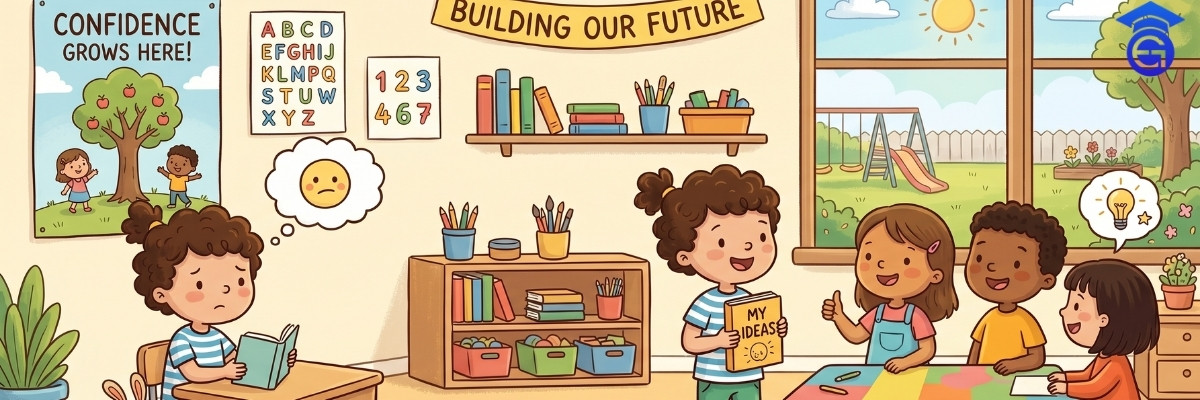
If you’ve ever watched your child cling to your side at a birthday party while every other kid runs straight into the chaos, you know the particular mix of worry and helplessness that comes with it. You want to help. You’re not sure if helping is even the right word. And somewhere underneath both of those feelings is a quieter question: is there actually something wrong, or is this just who they are?
What this covers
- Shyness isn’t the problem you think it is
- How confidence actually builds in quiet children
- The well-meaning things parents do that backfire
- What shyness looks like at school — and why it matters academically
- Why the environment matters as much as the child
- What you can do at home that genuinely helps
- The confidence that comes from getting good at something
- Questions parents ask most
Shyness Isn’t the Problem You Think It Is
Let’s start here, because it changes everything that comes after. Shyness is a temperament trait. It’s not a flaw, a failure of parenting, or something that needs to be corrected out of existence. Some children are simply more sensitive to new social situations, take longer to warm up, and find large groups genuinely draining rather than energising. That’s not a deficiency. It’s just a particular way of being in the world.
The problem isn’t shyness itself. The problem is when shyness prevents a child from doing things they actually want to do — asking for help when they’re confused, making friends they’d genuinely like to have, or speaking up when something matters to them. That’s the version worth addressing. Not “how do I make my quiet child loud,” but “how do I make sure their quietness isn’t limiting them in ways they don’t want.”
This distinction matters because the two goals require completely different approaches. Trying to turn an introverted child into an extroverted one is frustrating for everyone and mostly doesn’t work. Helping a shy child build enough confidence to function comfortably in situations that matter to them is entirely possible, and the methods are quite specific.
How Confidence Actually Builds in Quiet Children
Confidence doesn’t grow from being told you’re brave. It grows from discovering through experience that you can handle something you thought you couldn’t.
That sounds simple but it has real implications for how you support a shy child. The instinct is often to protect them from uncomfortable situations, to answer for them when someone asks them a question, to step in before the social difficulty arrives. That feels kind in the moment. But it also tells the child, repeatedly and without words, that you don’t think they can manage it.
The alternative isn’t throwing them in the deep end either. A shy child pushed into a situation well beyond their current comfort — speak in front of the whole school, introduce yourself to a room full of strangers, just go and join those children you don’t know — usually freezes or retreats further. That experience confirms their worst fear about social situations rather than challenging it.
What actually works is graduated exposure. Small steps into slightly uncomfortable situations, with support available but not intrusive. The goal is to create enough success experiences that the child’s internal story about what they’re capable of starts to shift. One conversation with one new person at the playground. One question asked in a small group. One moment of choosing to stay and try rather than pulling away. Each one of those is real evidence that accumulates.
A realistic scenario: a nine-year-old is at a new after-school activity, sitting alone at the edge of the group while everyone else seems to know each other. A parent who steps in and speaks for her (“she’s a bit shy, she’ll warm up”) is describing her shyness to a stranger, which embeds it further. A parent who says quietly, “You don’t have to talk to anyone, but you can if you want to,” and then gives her space to observe and decide in her own time, is doing something much more useful. The difference in what the child learns from each of those moments is significant.
The Well-Meaning Things Parents Do That Backfire
Most of the things that don’t help come from genuine care. That’s what makes them hard to stop doing. A few specific ones are worth naming.
Narrating the shyness to other people in front of the child. “He’s just shy” said to a teacher, another parent, or a relative while the child is standing right there is something children hear and internalise. It becomes a label that precedes them. In their own mind, they become the shy one — and identities, once set, are hard to shift. The child stops trying to be anything other than what they’ve been told they are.
Pressuring them to perform before they’re ready. “Say hello to your grandmother.” “Tell the man your name.” “Go and ask.” These requests, delivered with expectation in front of someone the child doesn’t feel comfortable with yet, usually produce either a frozen silence or tears. Neither is helpful. Neither teaches the child anything except that social situations are high-stakes and they’re likely to fail them.
Over-praising small social acts in a way that highlights the effort. “I’m so proud of you for saying hello!” feels supportive but it signals to the child that saying hello was a big deal — which confirms that it is. For a confident child, saying hello is nothing. Treating it as a major achievement reinforces that it’s unusually hard, which makes it harder next time.
Rescuing too quickly. Parents who answer for their child when a cashier asks a question, or who jump into a conversation before the child has had a chance to respond, are protecting the child from an experience that would actually be fine. Most of the time, the thing shy children are afraid of isn’t that bad. The checkout person isn’t going to judge them. The teacher isn’t going to be cruel. But they never find out, because someone else managed it first.
The harder truth: sometimes a parent’s anxiety about their child’s shyness is transmitted to the child and amplifies it. If you feel visible stress or embarrassment when your child goes quiet in a social situation, they notice. Children are extremely good at reading parental emotion and responding to it. If shyness is treated in the family as something to be ashamed of or urgently fixed, the child picks that up and becomes more self-conscious, not less.
What Shyness Looks Like at School — and Why It Matters Academically
In a classroom of 25 or 30 students, a shy child is almost invisible. Not because they’re not capable, but because every mechanism the classroom uses to surface capability, answering questions aloud, contributing to group discussions, putting a hand up when confused, is precisely the kind of interaction that shy children avoid.
The academic consequence of this is real and underappreciated. A shy child who doesn’t understand something will frequently sit with the confusion rather than ask the teacher. The question they didn’t ask in Year 6 becomes the gap that makes Year 7 harder. They understand what’s happening — they just can’t bring themselves to be the person who says so publicly.
Teachers often misread shy students. A child who never answers questions can look like they’re disengaged or don’t know the material, when in fact they know it perfectly well and simply cannot make themselves speak in front of the group. That misread affects how the teacher interacts with them, which affects their experience of school, which affects their confidence in that subject over time. It’s a cycle that nobody sets in motion deliberately but that causes real harm.
Group work, which is designed to be collaborative and social, often puts shy children in a position where they defer to louder peers and contribute less than they’re capable of. Their grades on group projects reflect the group’s output, not their individual understanding. By the time anyone notices a discrepancy between their apparent ability and their actual performance, it can be hard to trace back to shyness as the cause.
The classroom size question is genuinely important here. A child who can’t bring themselves to ask a question in front of 28 peers might ask the same question easily in a group of five or six, where the audience is smaller and the risk feels proportionally lower. The content hasn’t changed. The confidence threshold has.
Why the Environment Matters as Much as the Child
We talk about building confidence in shy children as if confidence is a thing inside the child that needs to be made bigger. That’s partly true. But it’s also true that confidence is massively context-dependent, and changing the context is often easier and more effective than trying to change the child.
Most shy children have environments where they’re completely at ease. It might be at home, with a particular set of cousins, in a small group of close friends, or in a class or activity where they’ve been long enough to feel genuinely known. In those environments, you might not recognise them as shy at all. They talk, they laugh, they offer opinions, they take up space.
The implication is that creating more environments like that is one of the most effective things you can do. Not bigger environments that they need to overcome their shyness to manage. Smaller ones where their confidence can operate naturally. One close friendship before five acquaintances. One activity they love and attend consistently before joining something new. Depth before breadth, for a temperament that functions better that way.
At school, this often translates into working with teachers rather than against the child. A teacher who understands that a particular student isn’t disengaged but shy can make specific accommodations: checking in quietly rather than calling on them publicly, giving them advance notice of questions they’ll be asked so they can prepare, or making sure they have opportunities to contribute in smaller group formats where they’re more comfortable. None of this requires a formal diagnosis or a special plan. It just requires the teacher to know the child.
What You Can Do at Home That Genuinely Helps
The most useful things are also the least dramatic. They don’t look like interventions.
Give the child time to warm up. Whether it’s arriving early to a party so they can see the space before it fills with people, or leaving a few minutes after the activity starts so the initial chaos has settled, the transition time matters more for shy children than for others. Rushing them into the middle of something before they’ve had a moment to orient is a consistent trigger for shutdown.
Let them observe before they participate. The parent at the playground who pulls their child into the group of other children immediately is well-meaning and often counterproductive. A shy child who’s given permission to watch first, to take the situation in, to decide when they’re ready, is much more likely to join in eventually than one who was pushed in before they were set.
Role-play low-stakes situations at home. This sounds silly but it works. Practising how to order food, how to ask a classmate for help, how to say excuse me to get past someone — doing these things playfully at home reduces the uncertainty when they arrive in real life. They’ve done a version of this. The words exist in their mouth. The situation is slightly less unknown.
Ask them about things they know. Shy children who feel competent in a subject or activity will often talk at length about it in a comfortable environment. Giving them regular opportunities to explain something they understand well builds the experience of having something worth saying. That carries over, slowly and imperfectly, into other contexts.
Don’t make every conversation about how they’re feeling. Sometimes the most helpful thing is to be entirely normal about the shyness — not discussing it, not working on it, not monitoring it. Just letting your child be a person who happens to be quiet, without that being the subject of constant gentle concern.
The Confidence That Comes from Getting Good at Something
One of the most reliable paths to genuine confidence for shy children is competence. Not social competence specifically — just getting very good at something they care about.
A child who is an excellent swimmer, or a good chess player, or who knows more about a particular subject than anyone else in their class, has something that shyness doesn’t touch. Their confidence in that domain is real and earned, not performed or encouraged into existence. And competence-based confidence does transfer, partially, into other areas over time.
I’ve watched this pattern play out repeatedly. A shy student who struggles to speak up in class gets targeted support in the subjects where they’re weakest, builds genuine understanding, and starts to change at the edges. They ask one question in a session where they know the answer to the previous three. They correct something that was said incorrectly because they’re certain enough to trust their knowledge. The confidence comes from the competence, not from being told to be brave.
For parents, this means investing in the things your child already loves and is already building skill in, not just pushing them toward activities designed to socialise them. A shy child who becomes an excellent chess player hasn’t conquered their shyness. But they’ve built a layer of self-assurance that belongs to them and doesn’t depend on anyone else’s approval.
Academically, this is the same principle. A child who understands the material has one less reason to stay quiet. They still might not answer in front of 30 people. But in a smaller group, with a tutor who expects contributions but doesn’t put them on the spot, they start to trust their own voice because they’ve proved to themselves they have something worth saying.
Small groups make a real difference for shy students
Edugravity works with students from grade 2-12 in groups of maximum 6. For shy students who don’t ask questions in larger classrooms, that smaller environment changes the experience entirely. They get heard. They build academic confidence alongside social confidence, without anyone putting them on the spot. In-person in Sharjah or online across the UAE.
WhatsApp Us Book Free DemoQuestions Parents Ask Most
The Thing Worth Remembering
Shy children are watching. They notice everything happening around them, including how you respond to their shyness. The parent who treats their quiet child as someone worth knowing, who creates opportunities without forcing them, who doesn’t make shyness the defining story — that parent is doing something more useful than any specific technique.
Confidence grows from feeling like you matter in the room you’re in. For shy children, that starts with rooms small enough to actually be seen.
And some of the most interesting, perceptive, loyal, and quietly brave people you’ll ever meet were children who clung to the edge of birthday parties. They just needed the right conditions to show what they were made of.
If your child is shy and struggling academically, the two things are often connected in ways that aren’t immediately obvious. Edugravity’s small-group approach — never more than six students — creates the kind of environment where quieter students finally feel safe enough to ask questions and take up space. Book a free session to see how it works.
Key Takeaways
- Shyness is a temperament trait, not a problem to eliminate — the goal is making sure it doesn’t limit a child in ways they don’t want
- Confidence builds through small, successful experiences — not big leaps, not being told to be brave, and definitely not being put on the spot before they’re ready
- Common well-meaning approaches that backfire include narrating the shyness to others, rescuing too quickly, and over-praising ordinary social moments
- At school, shy children frequently underperform relative to their actual ability because they won’t ask questions or contribute in large group settings — smaller environments change this
- Competence is one of the most reliable paths to confidence for quiet children — when they get genuinely good at something, self-assurance follows