
UAE Bans Junk Food and Sugary Drinks in Schools Under New Health Guide
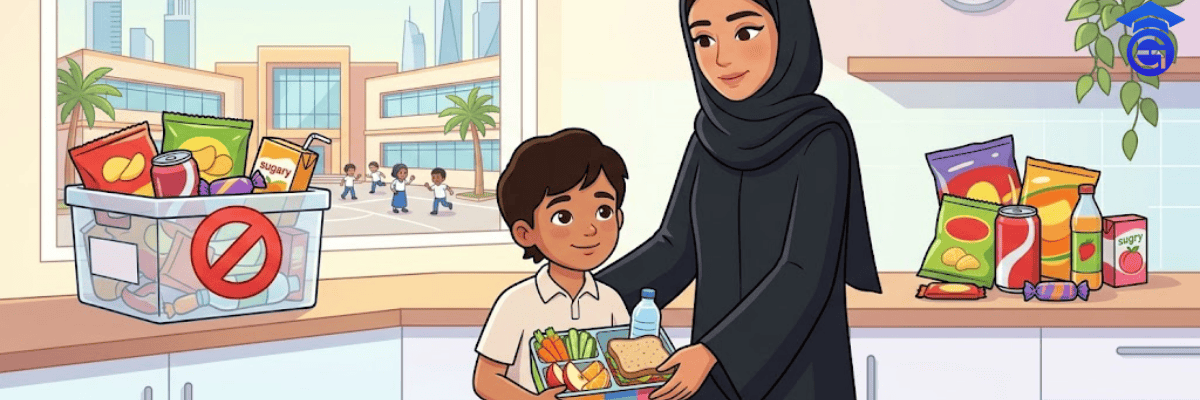
If your child has been coming home from school with a bag of chips or a can of something bright orange, that particular school-day ritual is coming to an end. The UAE has issued a national guide banning junk food, sugary drinks, and a long list of processed items from all school environments — and it applies to every school in the country, not just the public ones.
What’s in this article
- What this guide actually is
- Which schools does it cover?
- The full list of banned foods and drinks
- Three types of school canteens under the new rules
- What schools are now responsible for
- What it means for food suppliers
- Who actually enforces this?
- The honest take on whether this changes anything
- Frequently asked questions
What This Guide Actually Is
The UAE’s health authorities have published the National Guide for Food and Beverages in the School Environment. It’s a formal framework — not a suggestion — that sets rules for what can be sold, provided, or promoted in school canteens and cafeterias across the country.
The stated goal is practical and sensible: help students develop healthy eating habits, give them the energy and nutrients they need to actually focus during the school day, and address the documented link between nutrition and academic performance. The guide also calls out obesity and malnutrition as specific problems it’s trying to push back on — two things that don’t often get mentioned in the same sentence, but are both real concerns in the UAE school context.
It’s worth noting what this guide isn’t: it’s not a dietary plan for parents to follow at home. It’s not about lunchboxes packed at home. It governs what schools sell, what suppliers bring in, and what food service providers offer on school premises. That’s the scope.
Context: This isn’t the first time UAE authorities have moved to tighten school food standards. Abu Dhabi had already published its own rules for school lunches in 2026. This national guide now standardises the approach across all emirates rather than leaving it emirate-by-emirate.
Which Schools Does It Cover?
All of them. The guide is explicit: its principles apply to public schools, private schools, independent schools, vocational schools, and centres for People of Determination across the UAE. No carve-outs for international schools or particular curricula.
It also covers food suppliers and any entities managing or handling school canteen services — so if your school’s canteen is outsourced to a third-party operator, that operator falls under the same rules as the school itself. The guide closes the gap between a school that wants to comply and a supplier that brings in whatever sells.
This is significant. In the past, some schools had strong nutrition policies and others had canteens that operated with minimal oversight. A national standardised framework creates a consistent baseline, which is the whole point.
The Full List of Banned Foods and Drinks
Here’s exactly what the guide bans from school environments. No wriggle room, no “limited quantities” — these items are out.
Prohibited in all UAE schools
- All sugary drinks — soft drinks, energy drinks, flavoured beverages of any kind
- Tea and coffee — including standard offerings at secondary school canteens
- Candy and sweets — hard candies, soft candies, gum, and lollipops
- Chocolate — including chocolate-coated biscuits
- Fried foods — potato chips, French fries, cakes, and donuts
- Nuts and nut-containing products — any product with nut traces, including nut pastes and nut-based biscuits (this is partly an allergy management measure)
- Processed meats — mortadella, sausages, and similar processed meat products
Some of these are expected — nobody is surprised that energy drinks and fried food are on the list. But a few items will probably catch some parents off guard. Tea and coffee being banned across the board means secondary school canteens that previously offered hot drinks to older students will need to pull those items. Nut bans are more restrictive than many schools’ existing allergen policies. And the processed meat ban removes a lot of quick, affordable sandwich fillings that have been school canteen staples for years.
The mortadella ban specifically is going to be felt. It’s one of the most common, cheapest sandwich fillings available in UAE school canteens. Replacing it with something nutritionally equivalent and similarly priced is a real operational challenge for canteen operators, and parents who rely on school canteen meals as part of their child’s day will notice the shift.
Three Types of School Canteens Under the New Rules
The guide doesn’t treat all school canteens the same, which makes sense. A school with a full kitchen is a different setup from one selling pre-packaged items out of a kiosk. It classifies school food facilities into three categories:
Canteens selling and distributing pre-packaged food items
Cafeterias preparing sandwiches on-site
Full-service school kitchens and school restaurants
Each category presumably carries different compliance requirements, though the blanket prohibitions on the banned food and drink list apply across all three. The distinction matters for how schools are inspected and what they’re required to document — a full-service kitchen has more food safety obligations than a kiosk selling sealed packets.
What Schools Are Now Responsible For
The guide assigns 13 specific responsibilities to schools. That’s a significant list, and it’s worth understanding what it means in practice rather than just citing the number.
Schools are required to fully comply with all food service standards and have canteen facilities that meet strict specifications on food safety, hygiene, and quality. Staff working in canteens must receive proper training on nutrition and hygiene standards — this means schools can’t just hire whoever’s available to staff the canteen without ensuring they understand the rules they’re working under.
Schools must also regularly verify that the products being sold actually meet the nutritional guidelines. That’s ongoing monitoring, not a one-time check. And all food-related complaints have to be documented, along with what action was taken. Parents are also explicitly granted access to canteen menus under this framework, which is a transparency measure worth noting.
On the supplier side, schools are required to verify that food suppliers hold valid permits from local municipalities before those suppliers can operate on school premises. This closes a gap where some suppliers previously operated in schools without proper municipal approval.
For parents: Under this guide, you have the right to access your child’s school canteen menu. If you’ve previously had concerns about what your child was eating at school and couldn’t get a straight answer, the framework now requires schools to make this information available. It’s worth asking.
What It Means for Food Suppliers
Suppliers get their own set of obligations in the guide, which is significant because in the past, much of the responsibility landed on schools with limited ability to push back on what suppliers brought in.
Suppliers must obtain and maintain valid permits, comply with nutritional standards on an ongoing basis, and conduct nutritional assessments for all food items based on ingredients and portion sizes. They also have to provide relevant information to schools and regulatory authorities when asked — no more vague claims about a product’s nutritional profile without documentation to back it up.
One detail that matters: if a product’s recipe, ingredients, or portion size changes, the nutritional data has to be updated. This prevents a product getting approved under one formulation and then quietly changing in ways that affect its nutritional profile.
Suppliers also need to coordinate with schools on individual dietary needs — which connects to the broader push to make school food environments work for students with allergies, intolerances, or specific health requirements, not just the average student.
Who Actually Enforces This?
Enforcement is split between local authorities and schools, with reporting going up to the Ministry of Health and Prevention.
Local authorities in each emirate are responsible for designating entities to carry out monitoring and inspection, supervising compliance, and establishing appropriate penalties for violations. They also collect data on implementation and report periodically to the Ministry of Health, covering compliance levels, inspection outcomes, corrective actions taken, and any violations recorded.
The guide establishes a structure that includes both top-down oversight and school-level accountability. Schools can’t just wait for an inspector to show up — they’re expected to actively manage their own compliance and document it. The question of how robustly this gets enforced in practice, and how consistent enforcement is across different emirates and different types of schools, will only become clear over time.
That’s the honest version: the framework is solid. Implementation is the part that requires sustained attention, and that’s true of any policy of this kind anywhere in the world.
The Honest Take on Whether This Actually Changes Anything
For parents who’ve spent years packing lunchboxes partly because they didn’t trust the school canteen, this guide is a meaningful step. The standards are real, the prohibited items are specific, and the accountability structure — schools verifying suppliers, suppliers holding valid permits, local authorities inspecting and reporting — is more robust than what existed before as a national framework.
That said, implementation always lags behind policy. Some schools will adapt quickly; others will take longer to find compliant suppliers, retrain staff, and replace banned items with genuinely nutritious alternatives at reasonable prices. The mortadella-and-chips situation doesn’t change overnight just because a guide is published. It changes when inspections happen, when violations carry real consequences, and when school operators have time to adapt supply chains.
There’s also a question of what gets offered instead. Removing junk food is the easy part. Replacing it with food that students will actually eat, at prices that work for families across different income brackets, in canteens with varying levels of equipment and staffing — that’s where the practical difficulty lies. A guide that bans everything without supporting schools to build better alternatives can leave canteens empty of options rather than full of good ones.
I’d expect the impact to be real but gradual. The framework is there. Whether it produces the outcomes — fewer sugary drinks, better attention spans, improved health outcomes for students over time — depends on what comes next in terms of enforcement and practical support for schools.
Supporting students who are focused, healthy, and ready to learn.
At Edugravity, we work with IGCSE and A Level students across Sharjah, Dubai, and Ajman. Good nutrition matters for concentration and performance, and so does structured academic support. Small groups of maximum 6 students, subject-specialist tutors, and a learning environment built around what students actually need. Get in touch.
WhatsApp Us Book Free DemoFrequently Asked Questions
What foods are banned in UAE schools under the new guide?
The guide prohibits: all sugary drinks including soft drinks, energy drinks, and flavoured beverages; tea and coffee; hard and soft candies, gum, and lollipops; chocolate and chocolate-coated biscuits; fried foods including chips, fries, cakes, and donuts; nuts and any nut-containing products; and processed meats including mortadella and sausages.
Does this apply to private and international schools in the UAE?
Yes. The guide explicitly covers public, private, independent, and vocational schools across the entire UAE, without distinction by curriculum or emirate. International schools are not exempt.
Does the ban apply to food brought from home in lunchboxes?
No. The guide governs what schools sell, serve, and promote on school premises — through canteens, cafeterias, and food suppliers. It does not extend to food parents pack for their children to bring from home.
Why are nuts banned in UAE schools?
The guide includes nuts and nut-containing products (including nut pastes and biscuits with nut traces) in the prohibited list as part of allergen management, not solely for nutritional reasons. Nut allergies are a serious safety consideration in school environments with large numbers of children.
Are tea and coffee really banned from UAE school canteens?
Yes. The guide bans tea and coffee from school environments, which includes secondary school canteens that have previously offered hot drinks to older students. The ban covers all age groups within the school setting.
Who is responsible for enforcing the new UAE school food rules?
Enforcement sits with local authorities in each emirate, who designate inspection entities and set penalties for violations. Schools are also required to actively manage their own compliance, train canteen staff, verify supplier credentials, and document food-related complaints. Reports go up to the Ministry of Health and Prevention on a periodic basis.
Can parents see what’s on their child’s school canteen menu?
Yes. The guide explicitly grants parents access to canteen menus. Schools are required to make this information available, so if you haven’t been able to find out what’s being sold at your child’s school before, you now have a formal basis for requesting it.
Key Takeaways
- The UAE has published the National Guide for Food and Beverages in the School Environment, banning a specific list of unhealthy items from all school canteens across the country.
- Banned items include all sugary drinks, energy drinks, tea and coffee, sweets, chocolate, fried food, nuts, and processed meats including mortadella and sausages.
- The guide applies to all schools — public, private, international, vocational — and to all food suppliers and canteen operators working on school premises.
- Schools have 13 specific responsibilities under the guide including supplier verification, staff training, and documentation of food complaints. Parents are also granted access to canteen menus.
- Local authorities in each emirate are responsible for inspection and enforcement, with periodic reports to the Ministry of Health and Prevention.
- The practical impact will depend on enforcement consistency and how well schools can replace banned items with nutritious, affordable alternatives students will actually eat.