Pearson Edexcel Cancels IGCSE and A Level Exams in UAE for 2026: What Students and Families Need to Know
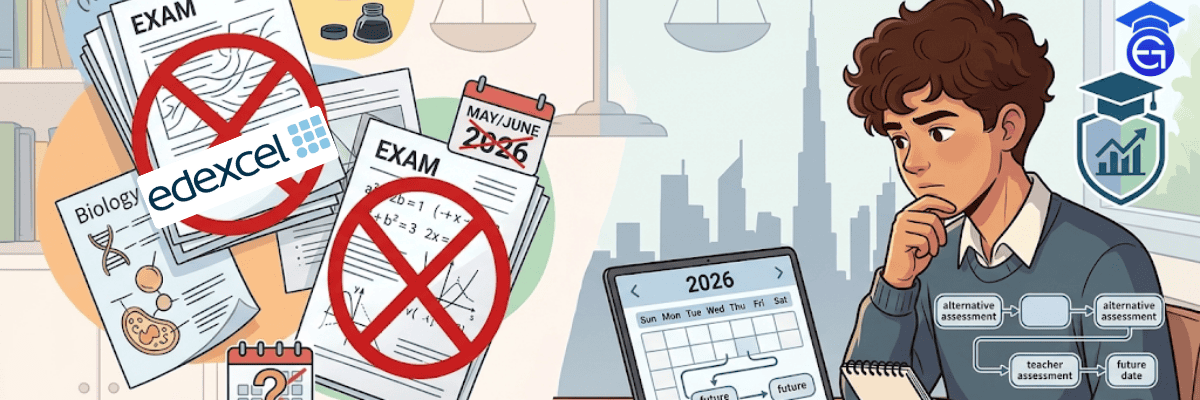
Pearson Edexcel has confirmed that IGCSE, AS Level, and A Level exams in the UAE will not go ahead for May/June 2026. If your child is one of the thousands of students sitting British curriculum exams this summer, here’s what actually happened, what comes next, and how to think about the weeks ahead.
What’s covered in this article
What Pearson Edexcel Actually Announced
On 2 April 2026, Pearson Edexcel confirmed that all International GCSE, International A Level, and iPLS exams scheduled in the UAE for the May/June 2026 series have been cancelled. The announcement came from Emma Whale, Pearson’s Vice President for International Schools, who stated the decision was made with the safety of students and staff as the first priority.
This isn’t just the UAE. The cancellation also covers Bahrain, Kuwait, Qatar, and Lebanon. So if you have family in those countries asking the same questions, the situation is the same.
Pearson was clear that alternative grading arrangements are being finalised and that schools would be updated as soon as details are confirmed. They referenced their “long-standing contingency processes” for exam disruption, which is reassuring in theory, even if it doesn’t feel that way when your Year 11 or Year 13 student is sitting at home wondering what this means for their future.
Quick summary: All Pearson Edexcel IGCSE, AS Level, and A Level written exams in the UAE for May/June 2026 are cancelled. Alternative grade arrangements are coming. Schools are being contacted directly by Pearson with next steps.
Why Were the Exams Cancelled?
Pearson cited the regional security situation, stating the decision was taken in consultation with local authorities and other international awarding bodies. UAE schools have been on distance learning since late March, which obviously makes sitting in-person exam halls impossible.
This wasn’t entirely unexpected. IB exams were cancelled a few days before this announcement. OxfordAQA had already cancelled its IGCSE and International A Level exams in the UAE earlier this week. CBSE and CISCE had already called off Indian curriculum exams weeks earlier. Pearson was, in some ways, following a pattern that had been building for a while.
What’s different about Pearson is scale. Edexcel is one of the most widely used exam boards in UAE British curriculum schools. The number of students affected here is significant.
What About Cambridge, AQA, and Other Boards?
This is probably the question most parents are searching for right now.
As of today, Cambridge International and AQA have not officially announced cancellations for the UAE. That could change. The situation is fluid, and given that IB, OxfordAQA, and now Pearson Edexcel have all cancelled, it would be surprising if Cambridge didn’t follow. But that’s not confirmed yet.
Schools following the Cambridge IGCSE and A Level curriculum should watch for communications directly from Cambridge International. If there’s been nothing from your school yet, contact the exams officer and ask. Don’t wait.
Important: If your child is sitting Cambridge IGCSE or A Levels, check your school’s official communication channels. Cambridge has not announced a cancellation as of 2 April 2026, but decisions are expected imminently.
How Will Grades Be Awarded Now?
This is the part nobody can fully answer yet, which I understand is maddening. Pearson has said it’s finalising its arrangements and will publish detailed FAQs specifically for countries where exams have been cancelled.
What we do know, based on how these contingency processes have worked in the past, is that grades will be calculated using the evidence already available from a student’s coursework. Schools that have been thorough about mock exams, formal assessments, and internal testing will be in a stronger position to advocate for their students.
Arcadia British School’s executive principal put it clearly when discussing the broader situation: a robust evidence model drawing on mock exams, formal assessments, and coursework would form the basis of any teacher-assessed grade. That’s essentially what happened in the UK during COVID, when calculated grades replaced written exams in 2020 and 2021.
What does this mean practically?
Your child’s grade will likely be based on some combination of: mock exam performance, coursework submitted during the year, internal school assessments, and possibly teacher recommendations using the full picture of a student’s ability.
The exact formula will come from Pearson. Schools will then submit evidence and Pearson will determine final grades. Students themselves don’t need to do anything different to what they’ve already done, but that existing body of work now matters more than most people expected it to.
For students still completing coursework or NEAs: Finish them properly. Don’t rush, don’t cut corners. That work is now central to how your grade gets calculated. It’s not supplementary anymore.
Will Universities Accept These Grades?
Yes. This is important to say clearly because students applying to UK universities especially tend to panic when they hear “alternative grades.” Don’t.
UK universities accepted calculated grades in 2020 and 2021. UCAS has processes for this. Universities understand that when exams are cancelled due to genuine disruption, alternative grades are still legitimate representations of student ability. UCAS will communicate directly with universities and students on how to handle this cycle.
If you’re applying to US universities, the context matters. Most admissions processes already include teacher recommendations and coursework portfolios as significant components. An explanation of the regional situation, if needed, is entirely normal and will not damage an application.
There are legitimate questions about grade inflation and consistency that universities will grapple with. But for individual students with strong academic records, this doesn’t change your prospects in any meaningful way. The universities you’re applying to have seen this before.
What Should Students and Families Do Right Now?
First, take a breath. Seriously. The situation is unsettling but it’s not unmanageable, and panicking helps nothing.
Here’s what actually makes sense right now.
Check your school’s communication channels. Your school’s exams officer is in direct contact with Pearson and should be your primary source of information. Ask them what they know. Ask when the next update is expected. Don’t rely entirely on social media or WhatsApp groups for news about this.
Keep working. This sounds obvious but some students, on hearing exams are cancelled, essentially stop. Don’t. The work you do now still contributes to your grade. Coursework that’s still in progress should be completed. If you have upcoming internal assessments at school, treat them seriously.
If you’re a Year 13 student with university offers, contact UCAS. UCAS will have guidance on how to handle conditional offers when grades come through alternative routes. Your school can also help liaise with universities directly if needed.
Don’t assume the worst about grade outcomes. Students who have worked consistently throughout the year are generally well served by contingency grading systems. It’s the students who banked everything on one final exam and did very little coursework who face more uncertainty.
One thing worth knowing: Pearson’s contingency model can calculate a grade if at least 15% of the qualification has been completed and assessed. Most students will have far more than that on record by now.
An Honest Take on All of This
I’ll be direct: this is genuinely hard for students, and the uncertainty that comes with “we’re finalising arrangements” messaging from exam boards is real and stressful. If you’re a Year 13 student who spent months preparing for A Level exams you won’t now sit, that’s a strange feeling. Something you’ve worked toward has changed shape without warning.
At the same time, this is not the first time a generation of students has had exams cancelled. The UK experienced two consecutive years of this during COVID. Those students went to university, got jobs, built careers. The mechanism changed. The outcomes didn’t collapse.
What matters now is that schools act quickly to submit strong evidence on behalf of their students, that students finish any remaining coursework properly, and that families stay informed through official channels rather than speculation.
There’s no perfect answer here. But there are sensible next steps, and the system, for all its messiness in moments like this, does have frameworks in place for exactly this kind of situation.
Need support navigating what comes next?
At Edugravity in Sharjah, we work closely with British curriculum students on coursework, internal assessments, and subject preparation. Whether you’re finishing IGCSE coursework or thinking about what alternative grading means for your A Level subjects, we can help you put your best work forward. Small groups, genuine attention, no generic prep.
WhatsApp Us Book Free DemoKey Takeaways
- Pearson Edexcel has cancelled all IGCSE, AS Level, and A Level exams in the UAE for May/June 2026 due to the regional security situation
- The cancellation also covers Bahrain, Kuwait, Qatar, and Lebanon
- Alternative grading arrangements are being finalised; details will come from Pearson directly to schools
- Cambridge and AQA have not announced cancellations as of 2 April 2026, but the situation remains fluid
- Grades will likely be based on coursework, mock exams, and internal assessments already completed
- UK universities and UCAS have handled alternative grades before; this does not disqualify students from their applications
- Students should complete any outstanding coursework thoroughly and stay in contact with their school’s exams officer for updates